
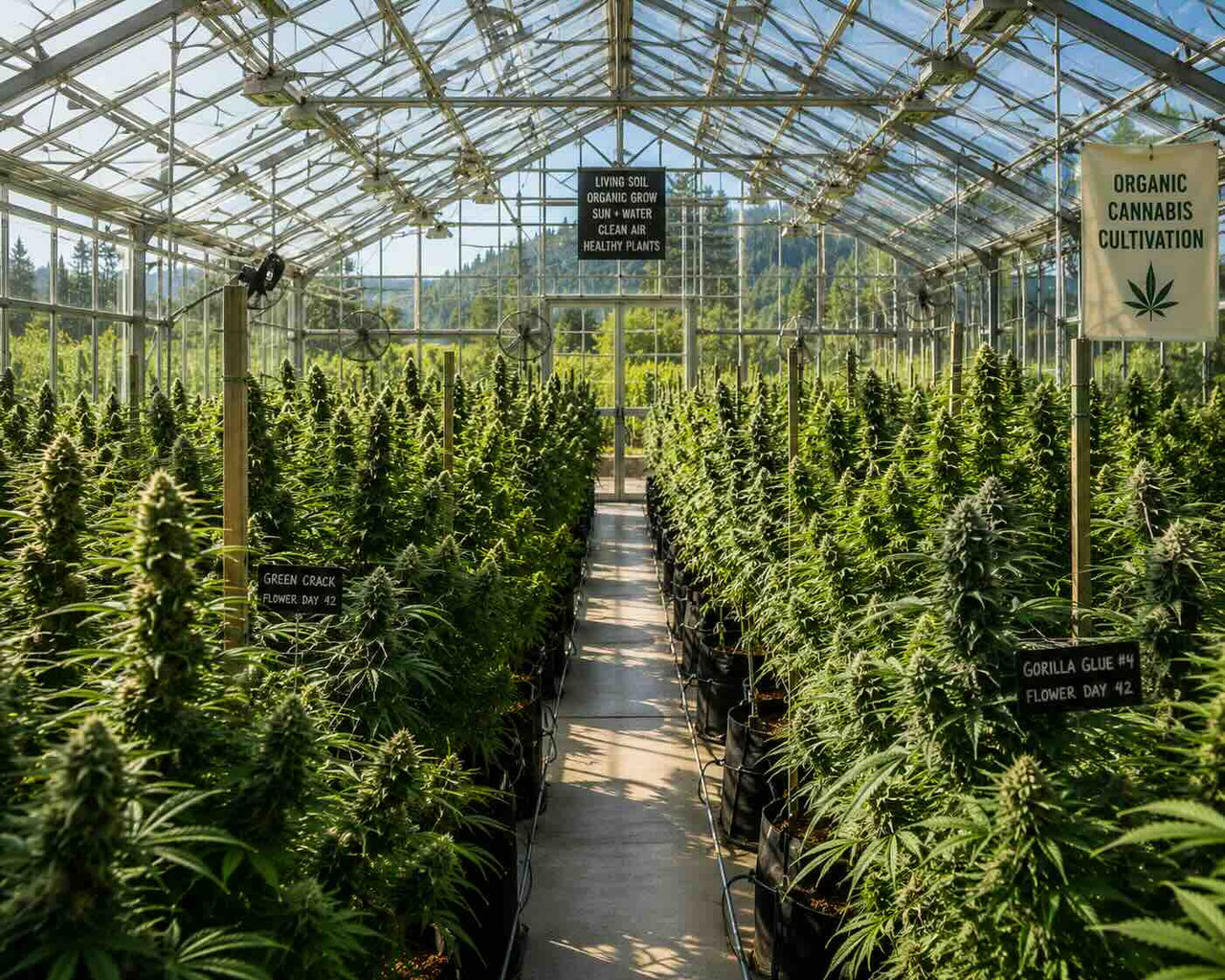
Yield is one of the first characteristics growers consider when selecting cannabis genetics. While potency, terpene profile, and flowering time are all important, harvest weight remains a major factor for both commercial producers and home cultivators. As a breeder, I have learned that truly high-yielding strains are not simply large plants. The best performers combine vigorous growth, strong branching, efficient flower development, and the ability to maintain productivity under real cultivation conditions.
Many growers focus exclusively on advertised yield figures, but genetics tell only part of the story. Environment, training techniques, nutrition, and cultivation experience all influence final results. The most productive harvests occur when strong genetics are matched with appropriate cultivation practices.
Understanding what makes a cultivar genuinely productive helps growers make better decisions and avoid unrealistic expectations.
What Defines a High-Yield Strain?
Yield is determined by several interacting characteristics. Vigorous vegetative growth allows a plant to build a large framework capable of supporting heavy flower production. Strong lateral branching increases the number of productive flowering sites, while healthy root development improves nutrient and water uptake.
As a breeder, I evaluate structure carefully because plant architecture often predicts yield potential long before flowering begins. A cultivar that distributes growth efficiently throughout the canopy typically outperforms one that concentrates production in only a few areas.
Flower density, internodal spacing, and environmental adaptability also influence productivity. The highest-yielding cultivars are usually balanced rather than extreme in a single characteristic.
Genetics Versus Growing Technique
Strong genetics create potential, but cultivation practices determine how much of that potential is realized. Even elite high-yield strains can produce disappointing harvests when environmental conditions are poor.
Lighting, irrigation, airflow, nutrition, and root-zone management all influence productivity. Growers who master the fundamentals consistently achieve larger harvests than those searching for shortcuts.
Many cultivators researching productive autoflower genetics compare options through Ministry of Cannabis. Regardless of cultivar selection, maximizing yield requires combining quality genetics with effective cultivation techniques.
In my experience, the best growers focus equally on plant health and genetic selection.
Indoor and Outdoor Yield Considerations
Yield expectations differ significantly between indoor and outdoor cultivation. Indoor growers benefit from environmental control, allowing consistent production throughout the year. Outdoor growers often have access to more space and natural sunlight, enabling plants to reach impressive sizes.
However, outdoor cultivation introduces additional variables including weather, pests, disease pressure, and seasonal limitations. A strain that performs exceptionally indoors may not necessarily be the best choice outdoors.
As a breeder, I evaluate cultivars in multiple environments because adaptability is often just as important as raw productivity.
The most valuable high-yield strains are those capable of performing consistently under a variety of conditions.
Common Mistakes When Chasing Bigger Harvests
The most common mistake is focusing exclusively on nutrient strength. Many growers assume that feeding more automatically produces larger yields. In reality, excessive feeding often creates stress that limits performance.
Another error is overcrowding plants. High-yield cultivation depends on light penetration and airflow. Dense canopies may look productive but often reduce efficiency and increase disease risk.
Growers also sometimes harvest too early. Flower development continues throughout the final weeks of flowering, and premature harvest can significantly reduce final weight.
Patience, observation, and environmental management frequently contribute more to yield than any single additive or cultivation product.
Selecting Genetics for Commercial Production
Commercial growers evaluate yield differently than hobby cultivators. Uniformity, flowering speed, disease resistance, and trimming efficiency become major considerations when operating at scale.
A cultivar capable of producing slightly smaller harvests but delivering consistent results every cycle may be more valuable than a strain with occasional record-breaking yields.
As a breeder, I view stability as one of the most underrated traits in commercial genetics. Predictable performance simplifies planning and improves long-term profitability.
The strongest commercial cultivars combine productivity with reliability, creating a balance that supports efficient cultivation.
Final Thoughts
Top high-yield marijuana strains succeed because they combine vigorous growth, efficient structure, strong flower production, and reliable environmental performance. Yield is never determined by genetics alone; it results from the interaction between plant potential and cultivation quality.
Industry analysis and cannabis market data can be followed through https://newfrontierdata.com, but the fundamentals of productive cultivation remain unchanged. Healthy plants, suitable genetics, and consistent environmental management continue to drive successful harvests.
As a breeder, I have found that the best yielding cultivars are not always the most heavily marketed. They are the plants that deliver strong, repeatable performance season after season, allowing growers to achieve reliable results with confidence.