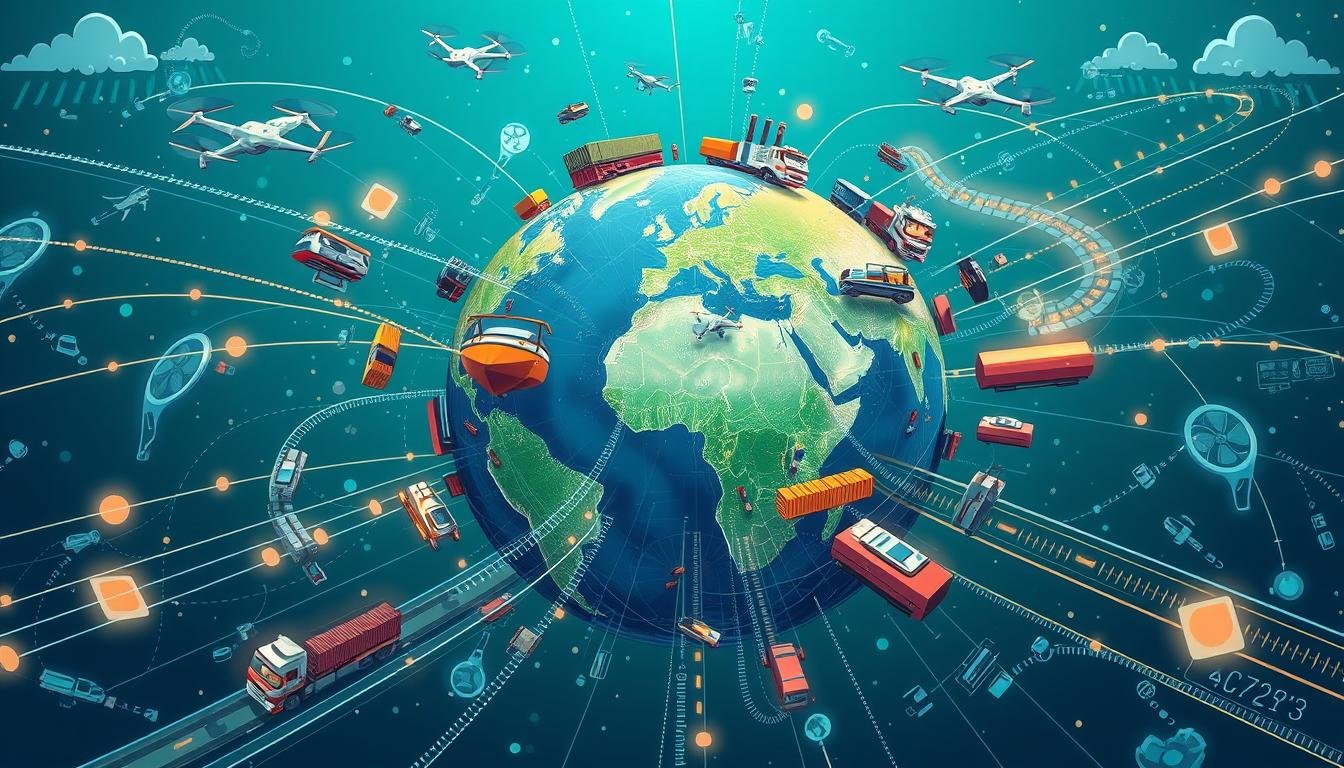
The 10 Startup And Entrepreneurship Trends Driving Growth Around The World In 2027
Entrepreneurship has always been a reflection of the moment it exists in, shaped through technology, the economic environment, cultural attitudes toward risk, and the difficulties that require to be addressed. The 2026/27 startup landscape is being shaped by a unique combination of forces: innovative new tools that have dramatically lowered the cost of establishing an enterprise, a maturing world-wide funding system, and some truly huge problems with climate, health and infrastructure that have been attracting the attention of a number of entrepreneurs. These are the top ten startups and entrepreneurship trends driving global growth to 2026/27.
1. AI dramatically reduces the cost To Start A Business
The challenge of constructing an efficient product has dropped dramatically. AI instruments now manage large portions of software design, the design process, marketing copywriting, customer service, and financial modeling, which used to require either significant capital investment or a large team to start. Small teams with minimal resources can build a functioning prototype, begin a market presence, and begin to acquire customers in a fraction of the time it would have taken five years before. The result is a surge of leaner, faster-moving startups and increasing competition virtually every sector and is creating opportunities for entrepreneurs to reach a wider range of people.
2. The Solo Founder And Micro-Startups Rise
Closely linked to the cutting of startup costs by AI is the growth of the solo founder and micro-startups. These are businesses which are managed and owned by an individual or two who would have required to have a team of ten decade before. AI handles customer service, develops content, writes code, and manages everyday operations, while a single founder focuses on strategy, relationships and the direction of the product. The fastest-growing new companies that will launch in 2026/27, are exceptionally thin operations that can generate substantial revenues and without the staffing that has always been associated with the notion of scale. The idea that a startup should to look like is being rewritten.
3. Climate Tech Attracts Record Entrepreneurial Attention
The intersection of a pressing global needs and the availability of substantial capital has led to climate technology becoming one of the fastest-growing industries for startups around the world. Energy storage, green hydrogen the sustainable agricultural system, carbon capture infrastructure for climate adaptation, as well as the software systems required to control the energy transition have all attracted founders and investors in a large number. Governments that are backing the sector with the commitment to purchase and policies are taking a risk on early-stage bets in strategies that render climate technology increasingly appealing in comparison to other deep tech categories. The belief that this sector is where genuinely important problems are being addressed is attracting experts as well as capital.
4. Emerging Markets Create More Globally Large Startups
The world of entrepreneurship changing. Startup ecologies of Southeast Asia, Latin America, Africa, and South Asia have grown significantly and are now producing businesses which are not simply local adaptations of Western models but genuine responses to the particular conditions that their market. Fintech serving people without banks and agritech that addresses food security, and healthtech providing infrastructure when traditional systems aren't present have all led to substantial businesses. International investors who previously focused just on Silicon Valley, London, as well as a handful of other established hubs are now far more attentive to what's happening by the entrepreneurs in Nairobi, Lagos, Jakarta, and Bogota.
5. Vertical AI Startups Find a Product-Market Fit that is Strong
The initial wave of AI excitement produced a large number of applications that compete using broadly similar capabilities. The best chance for longevity is turning out to be vertical AI startups that develop extremely specialized AI apps for specific processes or industries. Legal document analysis as well as medical imaging interpretation construction site monitoring as well as financial compliance automation and optimisation of agricultural yields are just a few areas where AI products that are trained on specific domain research and tailored to the specific requirements of one particular user are proving to have strong product-market match and genuine defensibility compared to bigger generalist competitors.
6. Funding based on revenue is an alternative To Venture Capital
Not every startup is suited with the business model that is based on venture capital with its implicit requirement for fast growth and a potential exit. Revenue-based financing, in which investors supply capital in exchange on a percentage of their future revenue rather than equity, has been growing rapidly in its use as an alternative source of financing. It is especially suited for growing, profitable businesses which do not require or would prefer not to deal with the dilution or pressure associated with traditional VC. The growing popularity of this model is a part of a larger diversification of the funding marketplace that makes the idea of entrepreneurship feasible for a broader spectrum of business types as well as profile of the founder.
7. The Community-Led Growth model replaces traditional Marketing
The costs of paid customer acquisition have become increasingly challenging since the costs of digital advertising have increased and trust of consumers in traditional marketing has diminished. The most effective growth strategy for the growing number of startups in 2026/27 is to build genuine communities around their products, turning early users into advocates, contributors or distribution channels. Growth that is based on community requires a different kind of investment, with regards to relationships, content as well as the patience to build something that people would like to join in, but it also creates customer loyalty as well as organic development that is difficult for paid channels to duplicate.
8. Technology for Health And Longevity Tech Attracts Serious Capital
Interest in extending healthy human lifespan has moved from being a fringe of Silicon Valley obsession into a solid and rapidly expanding sector of startups. Innovations in biomedical research, personalized medicine, diagnostics, and the technological infrastructure for monitoring and intervening with the aging process all are attracting significant investments. Consumer health startups that offer personalized nutritional advice, hormone optimization in preventative diagnostics, cognitive enhancement tools are making inroads into huge and expanding markets in demographics willing to invest seriously in their long-term health outcomes.
9. Regulatory Technology Grows As Compliance Complexity Rises
The regulatory environment facing businesses across healthcare, financial and other services security, data privacy, environmental reporting and employment is becoming increasingly complex in major markets. This is leading to an increased demands for technology that help companies to meet their compliance obligations quickly. Regtech companies that are developing tools for automated reporting, live monitoring of regulators Risk management, audit trail generation are growing quickly and are often working with regulators themselves to define what compliance-related solutions should look like. Compliance burden, commonly viewed purely as a cost, can be seen as a significant driver of genuine business opportunities.
10. Purpose-driven Entrepreneurship attracts the Best Talent
The most knowledgeable people entering work in 2026/27 will have more choices than any previous generation, and a rising proportion of them will address issues that are significant rather than simply optimizing on compensation. Startups that address the most pressing issues in education, health and climate, financial inclusion infrastructure and financial inclusion are competing with commercial businesses for top talent when they can create a mission that is aligned with market conditions. Startup founders who can explain an argumentative reason as to why the business exists beyond financial returns are finding that purpose is not just an expression of values, but the real reason for their existence and a significant retention and recruiting benefit.
The startup landscape of 2026/27 has a greater geographical diversity and more easily accessible. It is also more focused on solving issues than at previously in the history of entrepreneurship. What tools are accessible to entrepreneurs are never more effective and the financial resources available to back ambitious plans, while less selective that during the easy money era remains significant. For anyone with a genuine issue to be solved and a determination to build something around it, conditions are just as favorable as they've ever been. To find further detail, head to some of these trusted To find additional information, head to some of these respected storydeskly.com/ for further information.

Ten Digital Commerce Developments Redefining The Way We Shop In The Years Ahead
Online shopping has become so widespread in our daily lives that it is common to forget that it was thought to be something of a novelty or restricted to specific categories of goods. It is now not just a transaction channel, but it is an essential element of the way in which retail works, the ways brands are built and the way consumers' expectations are created. The market continues to develop rapidly, driven by technology as well as shifting consumer preferences changing consumer behaviour, increasing competition, and the ongoing pressure on every company in the market to justify their presence in an ever-more efficient market. Here are ten online shopping developments that are transforming how you shop online as we move into 2026/27.
1. AI Personalisation Changes The Shopping Experience
The application of artificial intelligence to ecommerce personalisation has moved far beyond simple recommendation engines providing products based upon previous purchases. AI systems in 2026/27 are developing dynamic, real-time simulations of shopper's intent that are able to adapt to the context, time of day browser, device, and signals from across the vast digital footprint. This results in an experience of shopping that feels authentically tailored, not generically focused. For retailers, the commercial impact of sophisticated personalisation on conversion rates as well as average order value and customer retention is significant enough to warrant AI investing in this field has become a requirement for business instead of a differentiation.
2. Social Commerce Becomes A Primary Discovery Channel
The ability to shop directly into Social media sites has evolved into a significant commerce channel in its own right. Consumers are finding, evaluating, and purchasing products from their social feeds driven by recommendations from creators with shoppable content live events in commerce that combine entertainment with purchase. The approach, which was developed at enormous scale in China and now in place across Western markets. What this means for brands is that social engagement is no longer solely a brand awareness program but instead a direct revenue stream that needs the same standards of commercial discipline as any other component of a retail operations.
3. Ultra-Fast Delivery Raises the Bar For Logistics
Customer expectations about delivery time continue to accelerate. It is becoming increasingly commonplace in urban markets and the pressure to decrease the gap between purchase and delivery is causing a significant increase in fulfilment infrastructure, micro-warehousing located closer to demand centers autonomous delivery vehicles, and drone delivery services that are transitioning from trial to operating in a greater number of cities. for smaller retail stores meeting these expectations on your own is becoming increasingly difficult, driving consolidation around fulfillment networks and third party logistics providers able of an infrastructure investment. The environmental consequences of rapid transport logistics are receiving increasing attention, along with the competition in the market.
4. Recommerce and The Circular Economy Change the way that retail is shaped
The market for second-hand, refurbished, and pre-owned goods are growing more quickly than new retail across various product categories. Consumers' demand for lower prices and lower environmental impacts and the appeal products that are no longer available new is driving the growth of peer-to?peer resale platforms, companies that operate recommerce for brands, as well as special resellers of fashion, furniture, electronics, and sporting products. Brands investment in resales and refurbishment operations both in order to make money from secondary markets, and to build the relationships of customers looking to purchase secondhand rather than new. The stigma attached to buying used items across various categories is now mostly gone younger demographics.
5. Augmented Reality Can Reduce The Risk of online shopping
One of the major drawbacks of online shopping relative to physical retail is the inability of properly evaluating an item before buying. Augmented Reality is tackling this by focusing on specific categories that have sufficient maturity to be affecting purchasing habits and return rate in a meaningful way. Test-on clothes, eyewear as well as cosmetics virtual as well as putting furniture and accessories in a real space with a smartphone camera and looking at products in a real size in context prior to purchasing is all capabilities that are evolving from stunning demos to routine features of major platforms and brands' websites. The categories where fit, size, as well as appearance in the context of a product are having the most significant impact on conversion and returns.
6. Subscription Commerce transcends Convenience
Subscription-based models in ecommerce have grown beyond the simple convenience proposition of regular replenishment of consumables. The most successful subscriptions of 2026/27 focus on curation, community and the ongoing value that justifies ongoing payments, rather than locking-in mechanisms that were prevalent in earlier models. Consumers have become significantly more knowledgeable about the value of subscriptions and cancellation rates are a slap on businesses that are based on inertia rather than a genuine benefit. For retailers too, the economics of subscription, including higher quality of life, predictable revenue and more solid customer relationships are compelling when the value proposition behind it is strong enough to earn loyal customers.
7. The complexity of cross-border E-Commerce grows and becomes more complex
The ability to shop with retailers across the world has brought huge market opportunities, but also operational hurdles in the area of customs return, duties, localisation and consumer protection. International e-commerce is expanding as both retailers and consumers expand their reach to international markets, however the regulatory complexity is increasing along with the number of jurisdictions taking on digital services taxes and product safety rules, and consumer rights guidelines that apply also to sellers from abroad. Successful retailers in cross-border markets are those investing seriously in the localization, compliance infrastructure and logistical capabilities that true international retail demands.
8. Voice And Conversational Commerce Find Their Use The Case
The long-anticipated voice-based shopping channel, billed as a disruptive channel that has consistently failed to meet that expectation is now getting more real momentum in specific and well-defined instances of use. Reordering commonly purchased consumables addition of items to shopping lists, or making sure that the order is in good condition are all tasks where voice interaction offers substantial advantages over touchscreen-based alternatives. AI-powered conversational shopping assistants, using chat interfaces rather than via voice, are better than the competition, assisting customers make informed purchasing decisions, compare options, and receive personalised recommendations within an interactive format that works better for discerning purchases in comparison to conventional search and browse.
9. Sustainability Claims Facing Greater Scrutiny And Regulation
Consumer interest in the sustainability as well as ethical standing of online shopping is high but there is also a lack of trust in the claims about sustainability that companies make. Greenwashing regulation is tightening significantly across the major markets, requiring specific requirements for credible claims, transparent labelling and disclosure about the practices used in supply chains that makes vague sustainability messages more legally risky. Retailers who have made genuine environmental enhancements to their operations and supply chains are discovering that clearly credible sustainability credentials are transforming into an important distinction in the marketplace for the ever-growing number of consumers who are willing to follow through on their environmental preferences when credible information can be found to support their choices.
10. Payment Innovation Continues To Reduce Friction
The checkout experience is historically one of the biggest reasons for abandoning baskets in e-commerce, continues to improve through innovative payment methods that decrease hassle at the vitally important phase of the purchase journey. Buy now pay later has matured and is facing greater scrutiny from regulators about pricing and transparency. Digital wallets are increasingly becoming the primary payment method with a growing number online transaction. Security via biometrics is replacing passwords and card data entry in many contexts. One-click shopping, embedded payments via social platforms and apps and the constant expansion of bank-based open payment options are all contributing to a checkout experience which is more efficient, faster, secure in addition to being less likely lose customers at the last minute.
E-commerce in 2026/27 will be more sophisticated, more competitive, and more important for the entire retail sector that at any point in the past. The trends mentioned above indicate an evolving direction that will reward retailers that invest in customer experience, operational excellence and real value creation, against those that depend on category monopolies, information asymmetries or lock-in mechanics that consumers are increasingly adept at discovering and avoiding. The landscape of online shopping is constantly evolving, and the difference between where we are now and where it's going to be in the next five years will surprise just like the distance traveled. To find more context, check out these trusted noticiasmundo.es/ and find expert coverage.